
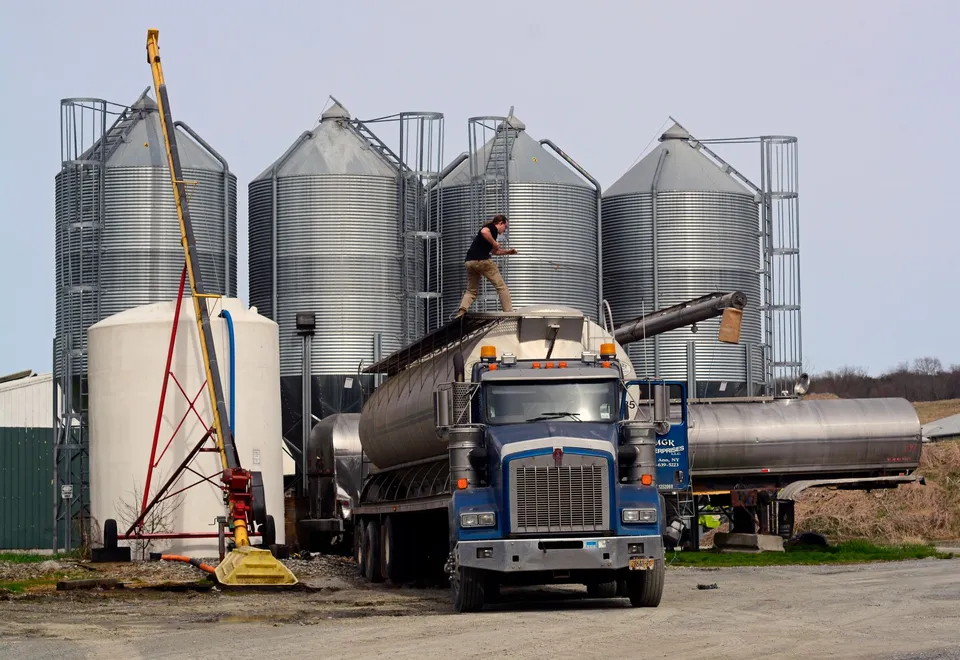
In International Falls, the best-fitting jobs often sit where systems meet: the mill, the clinic, the school district, the city utility stack, and the routes that connect them. That matters because the local labor market is not built around one simple downtown employer base. It is built around places that have to keep machines running, water moving, people scheduled, and goods shipped. The local evidence points to a workforce that rewards reliability, mechanical judgment, and comfort with more than one kind of task. The Boise Paper mill is the clearest example: Packaging Corporation of America says the International Falls mill has made paper for nearly 115 years, produces more than 500,000 tons annually on two paper machines, and operates as an integrated pulp and paper facility with hydroelectric generation, water filtration, and primary and secondary waste treatment systems at 400 2nd Street. Those details suggest a need for maintenance, instrumentation, process, safety, utilities, and shipping skills; that is an inference from the plant description, not a claim about any one open position.
Why the mill changes the job conversation
A place with that much infrastructure does not hire like a small retail strip. When a facility includes power generation, water treatment, and waste systems alongside production lines, the useful employee is often the one who can diagnose, document, and solve across boundaries. A mechanic who understands pumps and conveyors, an electrician who can trace a fault beyond one panel, or a logistics worker who can keep materials moving without breaking the schedule all have locally relevant value. That is one reason the county’s labor profile matters: DEED’s Koochiching County data show manufacturing, public administration, accommodation and food services, retail, construction, transportation and warehousing, and administrative support as major parts of the job base, with an average annual wage of $56,863 countywide in 2024. In other words, the local economy is diversified enough that a worker may move between production, service, and support work without leaving the area.
The occupation list reinforces that point. DEED’s Northeast Minnesota profile highlights demand for heavy and tractor-trailer truck drivers, police and sheriff’s patrol officers, substitute teachers, electricians, licensed practical nurses, nursing assistants, medical assistants, radiologic technologists, accountants and auditors, pharmacy technicians, dental hygienists, and financial managers. That mix is a reminder that local opportunity is not only industrial. It also includes the people who keep freight moving, children supervised, patients seen, and bills processed. For an applicant, the useful question is often not, What single industry am I in? It is, Which combination of skills makes me useful in a place where systems overlap?
The same skills show up in public service
International Falls city services make the overlap even clearer. The city handles streets, water, sewer, fire/EMS, housing-related administration, and parks, while nearby Ranier runs water, sewer, streets, alleys, and parks with a smaller staff and a more contract-based utility structure. Koochiching County’s employment page adds openings in public health, emergency communications, corrections, engineering, and heavy equipment. Taken together, those are not narrow office jobs. They are roles where someone may need to read a map, log a repair, talk to a resident, operate equipment, and work within public rules on the same day. For job seekers with maintenance, dispatch, CDL, facilities, or field-service backgrounds, this is one of the strongest local messages: technical dependability often travels farther than a very specific job title.
That same pattern helps explain why a local worker can move between sectors without starting from zero. A person who has learned preventive maintenance, safety procedures, stock control, or basic troubleshooting in one setting may be attractive in another because the surrounding institutions are all system-heavy. The city needs infrastructure. The county needs roads, communications, and public health support. The mill needs uptime. That makes International Falls a place where practical judgment can matter as much as a narrow credential, especially when employers want people who can stay steady through changing seasons and changing workloads.
Healthcare and schools widen the pathway
Healthcare is another local system with many layers beneath the front line. Rainy Lake Medical Center describes itself as the Borderland community’s preferred healthcare provider and employer, says it is building a new facility through its H.O.M.E. Project, and lists a Rainy Lake Clinic in International Falls with weekday hours from 7 a.m. to 7 p.m., a Littlefork clinic that operates Tuesday and Wednesday, and a Rainy Lake Pharmacy with Monday through Saturday service. RLMC is also documented as a 25-bed critical access hospital. That is important for workers because healthcare here is not only physicians and nurses. It also includes scheduling, billing, pharmacy, facilities, transport, and support functions that keep a local care network usable for residents who may not want to drive far for every appointment.
The school district plays a similar role. International Falls School District 361 lists its office at 1515 11th Street and shows functions tied to registration, new enrollment, transportation or busing, dining, and employment opportunities. CareerForce in International Falls adds job-search assistance and employment services, including no-cost help for young people ages 14-24 who are at risk of not finishing school and for veterans. Put simply, the district and CareerForce are not just public references in the background. They are part of the local labor pipeline, especially for people who need help connecting education, transportation, and a first stable paycheck.
Getting to work is part of the job
International Falls also has transportation conditions that shape what a job really costs in time and energy. Falls International Airport says Delta and SkyWest provide daily nonstop service to Minneapolis-St. Paul, the terminal is open 24 hours a day, and the airport functions as a U.S. Port of Entry. On the local ground side, Arrowhead Transit provides dial-a-ride inside International Falls Monday through Friday from 7 a.m. to 7 p.m. and Saturday from 9 a.m. to 3 p.m., plus limited out-of-town routes. That means the community has real mobility options, but not an unlimited commuter grid. For workers, employers, and families, the practical lesson is the same: a good job offer has to fit the route, the schedule, and the household’s actual transportation pattern.
So the strongest local takeaway is not that International Falls has one kind of work. It is that the town rewards people who can work across systems. If you have experience in maintenance, facilities, driving, dispatch, equipment, utilities, or healthcare support, you may find more doors here than the size of the city first suggests. If you are an employer, that is a hiring clue too: the best candidate may be the one whose background shows they can keep several moving parts aligned. For a next step, applicants can check the current openings on ifallsjobs.com/jobs/ and match their skills to the systems that keep the community running.