
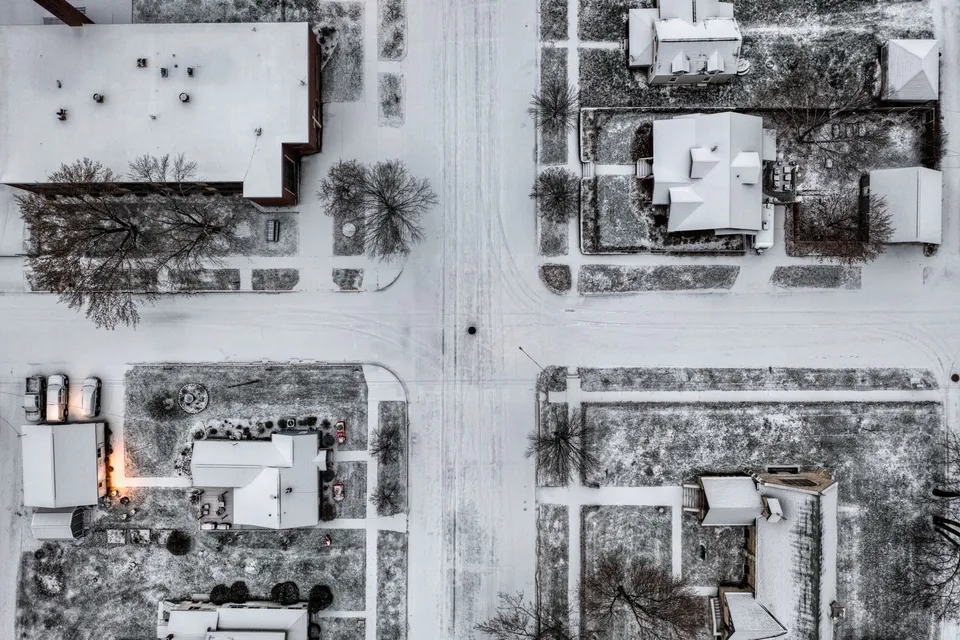
In International Falls, a job can look close on a map and still feel very different once you account for the actual trip to work. The city’s mean travel time to work is 8.6 minutes, but the county average is 16.3 minutes, which is a reminder that city jobs, county jobs, and nearby-community jobs do not all sit inside one easy commute ring.
That difference matters because the local transportation picture is practical, not flashy. International Falls has a compact city core, but many workers still move between different service systems: city streets, county roads, transit pickups, school schedules, and appointment trips. If you are deciding whether a job fits your household, the real question is not just whether the wage works. It is whether the shift, location, and backup plan all work together.
What the commute numbers are really saying
The short city commute suggests that a lot of work here happens close to where people live. That is helpful for applicants, but it can also hide a second reality: once a job sits outside the city limits, the commute can change quickly. The county’s longer average travel time shows why employers in places like Littlefork, Big Falls, Northome, or Ranier should be treated as separate commute decisions, not as automatic extensions of International Falls.
That matters in hiring conversations. A candidate may be willing to drive 10 minutes for a day shift but not 35 minutes for an early opening after a snow event. A role may be excellent on paper and still be a poor fit if the household only has one dependable vehicle, or if childcare pickup times leave no margin for delay. Those are not abstract concerns in a small labor market; they are the difference between a stable hire and a short one.
What Arrowhead Transit can do, and what it cannot
Arrowhead Transit is useful, but it is not the same thing as a full daily commuter rail or city bus system. The county schedule says Arrowhead Transit provides local bus service in International Falls and Koochiching County, with dial-a-ride inside International Falls city limits Monday through Friday from 7 a.m. to 7 p.m. and Saturday from 9 a.m. to 3 p.m. It also lists scheduled service to some out-of-town destinations, including a second-Friday route to Virginia and Duluth, and weekday service on the Blackduck-to-Northome route, with reservation requirements for certain trips.
That makes transit a strong tool for errands, appointments, and some local trips, but a weak substitute for a job that starts before service begins or ends after service closes. In other words, Arrowhead Transit can support work life here, but it usually does not replace the need to match a job to your own vehicle access, your schedule, or a reliable ride share inside the household.
For applicants, that means one simple habit can save a lot of frustration: check the shift start time before you check the pay rate. If the role depends on being on site at dawn, staying late, or traveling between towns, ask how employees actually make that trip in February, not just in July.
Why the airport matters even if you rarely fly
Falls International Airport adds another layer to the transportation story. The airport says Delta and SkyWest provide daily nonstop service to Minneapolis-St. Paul, the terminal is open 24 hours a day year-round, and the airport offers free parking and rental-car access. It also operates as a U.S. Port of Entry.
For most local workers, that does not mean daily air travel. It does mean the community has a direct route for training, interviews, specialty appointments, and occasional business trips that would otherwise take much longer. That is especially important for employers who need to bring in trainers, send staff to meetings, or support workers who occasionally need access to the Twin Cities without losing a whole day to ground travel.
The airport also tells you something about the local economy: International Falls is not only a place where people clock in and go home. It is a place that still connects industrial, health-care, and public-service work to outside markets and outside specialists.
Housing, broadband, and the rest of the household equation
Transportation is easier to think about when the rest of the household is settled. In International Falls, 90.2% of households had a broadband subscription in 2020-2024, and 84.7% of city residents lived in the same house one year earlier. In Koochiching County, those same figures were 89.3% and 86.8%.
Those numbers do not make travel unnecessary. They do show that many households have the internet access needed for online scheduling, remote forms, job searches, and telehealth, while still relying on real-world transportation for work and errands. They also suggest a stable local housing base, which matters because a commute decision is rarely just a commute decision. It is also a school drop-off decision, a grocery decision, and a weather decision.
That is one reason neighboring communities should be handled carefully. Ranier is close, but it operates with its own small-city service arrangements, including its own public works model and contracted utility services. A place that looks like part of the same map may still have a different daily rhythm once you factor in water, sewer, and roads.
A practical rule for applicants
If you are considering work here, ask these questions before you accept:
- How long is the drive from the exact address where I would work?
- Does the shift fit local transit hours, or is a vehicle essential?
- What happens when weather, childcare, or a second errand cuts into the commute window?
- If I live in Ranier or another nearby community, is the route still realistic every day?
- Would this job still work if I had to change vehicles, share rides, or miss one backup option?
Those questions are not pessimistic. They are how you turn a promising offer into a livable week. In a place like International Falls, the best job is often the one that fits the trip as well as the task.
If you are job hunting, start with the current openings on ifallsjobs.com/jobs/ and compare the worksite, shift, and commute before you apply. If you need help thinking through the fit, you can also call 218-WorkNow.